
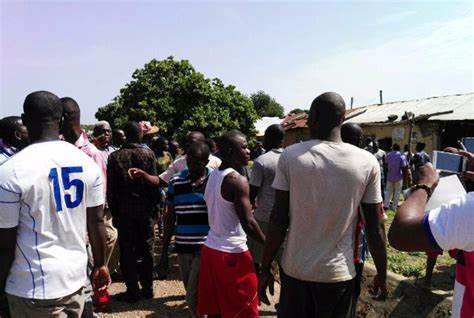
Sefwi Asawinso, Western North Region (February 2024)
On Monday, February 5, 2024, local youths in Sefwi Asawinso acted on a tip and broke into a room where they claimed to have found men engaged in “unnatural acts.” They captured two suspects and handed them to the police. According to the informant, four men were involved, but two escaped. One of the suspects is reportedly a well-known local fashion designer, and his alleged partner is from Nyinahini, near Bibiani.
On Wednesday, February 7, the chiefs and residents began searching for the two who fled. The chief linguist, Nana Kyeame Gyasi, and the Abusuapanin, Nana Kofi Nkrumah, called the act a serious offense and insisted on community cleansing rituals. The suspects and their landlord were summoned for the rituals, but only the landlord appeared, saying one suspect had left the area.
Kotokrom, Sunyani, Bono Region (September 2024)
On September 21, 2024, a group of angry youths in Kotokrom attacked Emmanuel Matteer, a 36-year-old businessman known as Mathy, and Peter Sarfo, also known as Area boy, who were suspected of being in a same-sex relationship. Witnesses say the men were found partially undressed in a room. The youths dragged them out and beat them severely with sticks, belts and iron rods. They were also forced to sit in the hot sun and “confess their sins.”
An eyewitness said the men were found in an intimate embrace. An anonymous source said Matteer, a married man who had moved to the area with his wife, had often been seen with a male companion, which led the youths to monitor him secretly. During the attack, Matteer escaped, leaving Sarfo behind, and the youths began searching for him, threatening to “teach him another lesson.” One youth was heard saying that any suspected gay person found would be killed.
The Bill and a Divided Nation
These incidents come against the backdrop of a highly controversial bill passed by Ghana’s parliament, which imposes strict restrictions on LGBTQ rights. The legislation had strong backing from religious and traditional leaders and wide support among lawmakers, but it has drawn sharp criticism from human rights groups and international observers. President Akufo-Addo has hesitated to sign it into law, though he has said LGBTQ practices will not be accepted under his leadership, a statement that has encouraged the bill’s supporters.
Critics warn that the law, together with vigilante violence, could create an environment of fear, discrimination and violence against LGBTQ people. Supporters say the bill reflects the country’s cultural and religious values. The tension highlights the struggle between human rights, tradition and governance in Ghana.